
-
×
 Atlas Of Dental Rehabilitation Techniques
1 × Rp6.222.000
Atlas Of Dental Rehabilitation Techniques
1 × Rp6.222.000 -
×
 Endoprosthodontics Guidelines For Clincal Practice
1 × Rp2.978.400
Endoprosthodontics Guidelines For Clincal Practice
1 × Rp2.978.400 -
×
 Oral Manifestation Hiv Infection
1 × Rp1.591.200
Oral Manifestation Hiv Infection
1 × Rp1.591.200 -
×
 The Sinus Bone Graft
1 × Rp4.977.600
The Sinus Bone Graft
1 × Rp4.977.600 -
×
 Esthetic Rehab In Fixed Prosth Vol2
1 × Rp8.160.000
Esthetic Rehab In Fixed Prosth Vol2
1 × Rp8.160.000 -
×
 Quintessence of Dental Technology 2019
1 × Rp3.182.400
Quintessence of Dental Technology 2019
1 × Rp3.182.400 -
×
 Applications Of Orthodontic Mini Implants
1 × Rp3.468.000
Applications Of Orthodontic Mini Implants
1 × Rp3.468.000 -
×
 Qdt 2017
2 × Rp4.406.400
Qdt 2017
2 × Rp4.406.400 -
×
 Aesthetic Dental Strategies
1 × Rp3.835.200
Aesthetic Dental Strategies
1 × Rp3.835.200
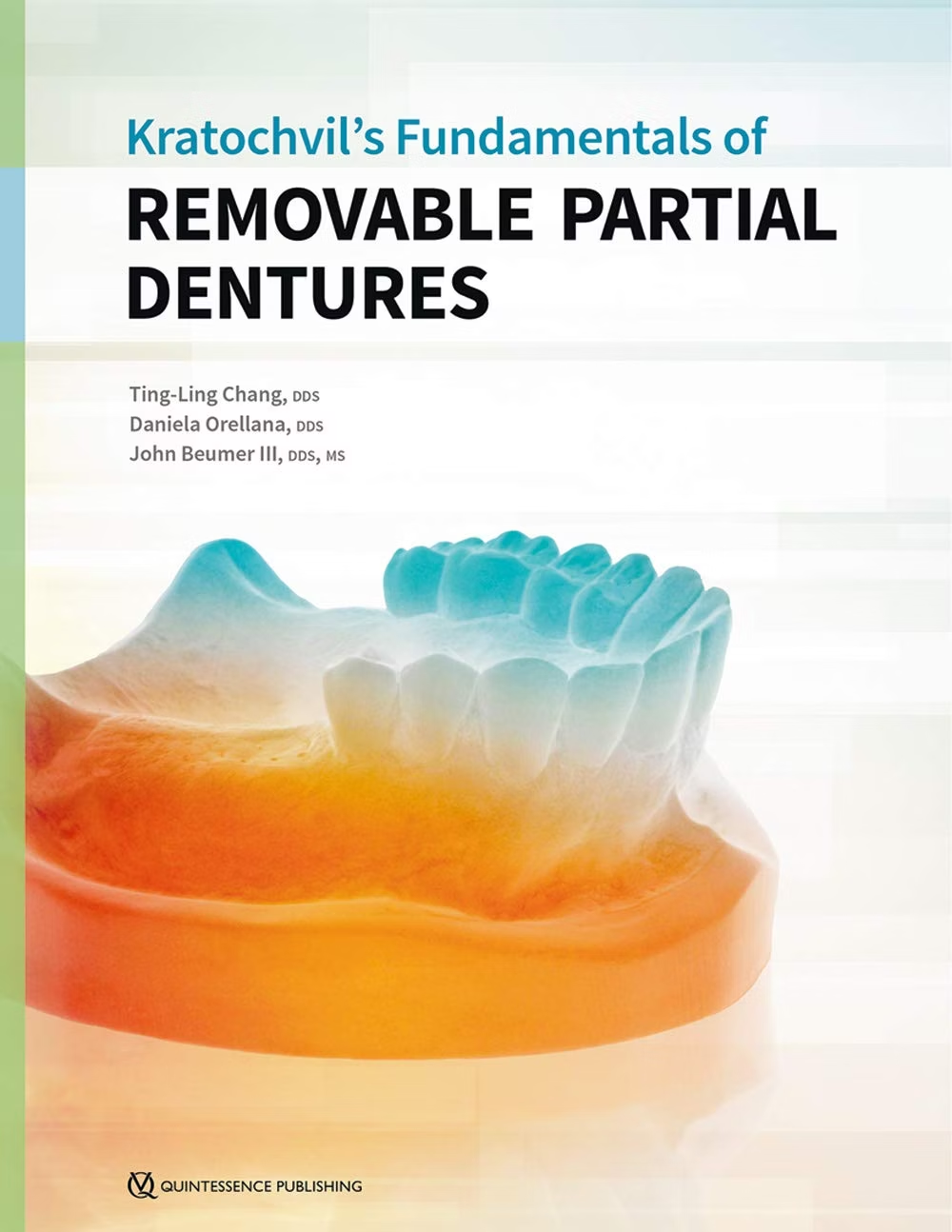
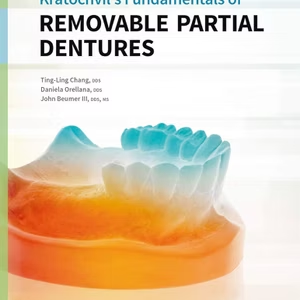
Kratochvil’s Fundamentals of Removable Partial Dentures
A Comprehensive Guide to Functional and Esthetic RPD Frameworks
Hardcover
In the 1960s, Professor F. J. Kratochvil revolutionized removable partial denture (RPD) design with the development of the RPI system—a clasp assembly comprising a Rest, Proximal plate, and I-bar retainer. Grounded in sound biomechanical principles, this approach has become a global standard in RPD design. This definitive textbook provides a deep dive into the biomechanics, design strategies, and clinical application of modern RPDs, both analog and digital.
With a balance of foundational science and real-world application, the book equips dental students, prosthodontic residents, and general practitioners to confidently design, fabricate, and deliver biomechanically sound and esthetically refined RPD frameworks for a wide variety of clinical scenarios—including complex cases involving maxillofacial defects, rotational paths, and implant-retained overdentures.
A Comprehensive Guide to Functional and Esthetic RPD Frameworks
Hardcover
In the 1960s, Professor F. J. Kratochvil revolutionized removable partial denture (RPD) design with the development of the RPI system—a clasp assembly comprising a Rest, Proximal plate, and I-bar retainer. Grounded in sound biomechanical principles, this approach has become a global standard in RPD design. This definitive textbook provides a deep dive into the biomechanics, design strategies, and clinical application of modern RPDs, both analog and digital.
With a balance of foundational science and real-world application, the book equips dental students, prosthodontic residents, and general practitioners to confidently design, fabricate, and deliver biomechanically sound and esthetically refined RPD frameworks for a wide variety of clinical scenarios—including complex cases involving maxillofacial defects, rotational paths, and implant-retained overdentures.
Key Features:
-
In-depth exploration of the RPI system, including its biomechanical basis and global impact
-
Step-by-step design principles for both maxillary and mandibular partial dentures
-
Surveying techniques and treatment positioning to maximize prosthesis success
-
Digital design and CAD/CAM integration for modern RPD manufacturing
-
Specialized chapters on esthetics, attachments, surveyed crowns, overlay dentures, and altered cast techniques
-
Case-based illustrations and an illustrated glossary to support clinical understanding and communication
-
Comprehensive workflow: From diagnosis and impressions to insertion, maintenance, and long-term follow-up
Contents Overview:
-
Introduction to Removable Partial Dentures
-
Rests and Their Functions
-
Tooth-Tissue Junction and Proximal Plate Design
-
Connectors and Base Elements
-
Retainers, Clasp Assemblies, and Indirect Retainers
-
Types of RPDs, Biomechanics, and Design Principles
-
Maxillary and Mandibular Design Sequences
-
Surveying and Treatment Positioning
-
Diagnosis, Planning, and Tooth Preparation
-
Impression Techniques and Lab Instructions
-
Digital Design and Framework Manufacturing
-
Physiologic Adjustment and Altered Cast Impressions
-
Occlusion and Records for RPDs
-
Esthetic Enhancements: Attachments and Rotational Paths
-
Combined Fixed-Removable Cases
-
Overlay RPDs Using Roots or Implants
-
RPI System for Maxillofacial Defect Rehabilitation
-
Treatment RPDs for Transitional Care
-
Clinical Insertion and Maintenance
-
Appointment and Procedural Sequence
Ideal For:
Dental students, prosthodontic residents, and clinicians seeking a biomechanically driven, esthetically conscious, and digitally integrated approach to partial denture design.
Be the first to review “Kratochvil’s Fundamentals of Removable Partial Dentures”
Related products

Reviews
There are no reviews yet.