
-
×
 Atlas Of Cosmetic Dentistry
1 × Rp4.263.600
Atlas Of Cosmetic Dentistry
1 × Rp4.263.600 -
×
 Orthodontic Setup
1 × Rp2.672.400
Orthodontic Setup
1 × Rp2.672.400 -
×
 Attachments In The Laboratory
1 × Rp2.346.000
Attachments In The Laboratory
1 × Rp2.346.000 -
×
 Infection Control For The Dental Team
1 × Rp714.000
Infection Control For The Dental Team
1 × Rp714.000 -
×
 Oral Health-Related Quality Of Life
1 × Rp1.203.600
Oral Health-Related Quality Of Life
1 × Rp1.203.600 -
×
 Endodontic-Periodontal Lesions
1 × Rp3.468.000
Endodontic-Periodontal Lesions
1 × Rp3.468.000 -
×
 Dental Erosion
1 × Rp1.815.600
Dental Erosion
1 × Rp1.815.600 -
×
 20 Principles Of The Alexander Discipline
1 × Rp3.121.200
20 Principles Of The Alexander Discipline
1 × Rp3.121.200 -
×
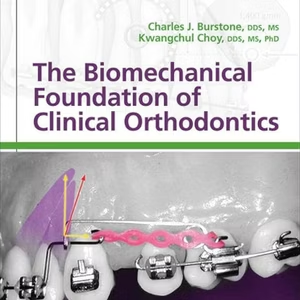 The Biomechanical Foundation Of Clinical Orthodontics
1 × Rp5.671.200
The Biomechanical Foundation Of Clinical Orthodontics
1 × Rp5.671.200 -
×
 ITI Treatment Guide Volume 11: Digital Workflows in Implant Dentistry
1 × Rp2.284.800
ITI Treatment Guide Volume 11: Digital Workflows in Implant Dentistry
1 × Rp2.284.800 -
×
 Dental Materials In Operative Dentistry
1 × Rp999.600
Dental Materials In Operative Dentistry
1 × Rp999.600 -
×
 Adhesive Restoration Of Endodontically Treated Teeth
2 × Rp999.600
Adhesive Restoration Of Endodontically Treated Teeth
2 × Rp999.600 -
×
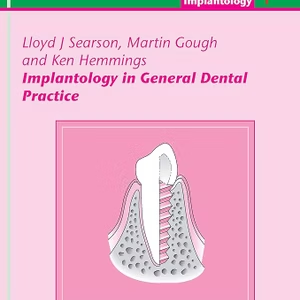 Implantology In General Dental Practice
1 × Rp999.600
Implantology In General Dental Practice
1 × Rp999.600 -
×
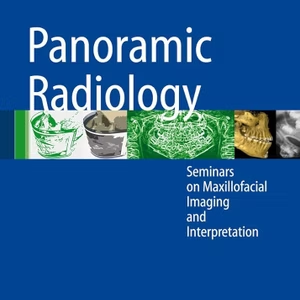 Panoramic Radiography
1 × Rp999.600
Panoramic Radiography
1 × Rp999.600 -
×
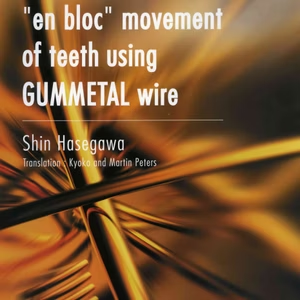 A Concept Of 'En Bloc' Movement Of Teeth Using Gummetal Wire
1 × Rp2.835.600
A Concept Of 'En Bloc' Movement Of Teeth Using Gummetal Wire
1 × Rp2.835.600 -
×
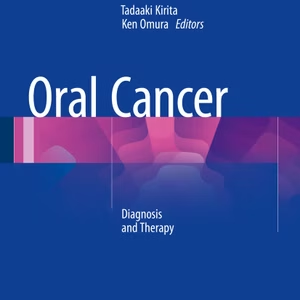 Oral Cancer
1 × Rp1.999.200
Oral Cancer
1 × Rp1.999.200 -
×
 Culturally Sensitive Oral Healthcare
1 × Rp999.600
Culturally Sensitive Oral Healthcare
1 × Rp999.600 -
×
 Contemporary Periodontal Surgery: An Illustrated Guide to the Art behind the Science
1 × Rp999.600
Contemporary Periodontal Surgery: An Illustrated Guide to the Art behind the Science
1 × Rp999.600 -
×
 Fixed Prosthodontics In Dental Practice
1 × Rp999.600
Fixed Prosthodontics In Dental Practice
1 × Rp999.600 -
×
 Endodontics Review
1 × Rp1.774.800
Endodontics Review
1 × Rp1.774.800 -
×
 Mini-Implants: The Orthodontics Of The Future
1 × Rp4.977.600
Mini-Implants: The Orthodontics Of The Future
1 × Rp4.977.600 -
×
 Bone Augmentation In Oral Implantology
1 × Rp3.345.600
Bone Augmentation In Oral Implantology
1 × Rp3.345.600

Uncategorized
How Sleep Affects Your Oral Health: The Surprising Connection
We often talk about brushing, flossing, and regular dental checkups when it comes to oral health—but what about sleep? Surprisingly, your sleep habits have a powerful influence on your teeth and gums. From nighttime grinding to dry mouth and inflammation, a poor night’s rest can do more damage to your smile than you might think.
Let’s uncover how quality sleep supports your oral health—and what happens when you don’t get enough of it.
😴 What Happens to Your Mouth While You Sleep?
While you’re sleeping, your body is repairing and recharging—including your mouth. But if you’re not getting restful sleep, or you’re dealing with issues like sleep apnea or mouth breathing, your oral health can suffer.
🦷 The Oral Consequences of Poor Sleep
1. Bruxism (Teeth Grinding)
Grinding or clenching your teeth during sleep—known as bruxism—can lead to:
Worn-down enamel
Cracks or chips in teeth
Jaw pain and TMJ disorders
Headaches and facial soreness
Bruxism is often linked to stress and sleep disturbances, and many people don’t even know they’re doing it.
2. Dry Mouth
Sleeping with your mouth open, snoring, or using a CPAP machine can reduce saliva flow at night. Less saliva = more bacteria = increased risk of:
Cavities
Gum disease
Bad breath
3. Sleep Apnea and Gum Inflammation
Sleep apnea doesn’t just affect your breathing—it can increase systemic inflammation, which in turn impacts your gums. Studies show people with sleep apnea are more likely to suffer from periodontal disease.
4. Weakened Immune System
Lack of sleep weakens your immune response, making it harder for your body to fight oral infections like gingivitis, ulcers, or cold sores.
💡 How to Protect Your Oral Health While You Sleep
Here are ways to keep your mouth in good shape—even while you’re catching Z’s:
✅ Wear a Night Guard
If you grind your teeth, a custom night guard from your dentist can protect your enamel and reduce jaw strain.
✅ Address Sleep Apnea
If you snore or feel tired during the day, talk to your doctor about a sleep study. Treating sleep apnea can protect both your heart and your gums.
✅ Sleep with Your Mouth Closed
Try to breathe through your nose at night. Nasal strips or a humidifier can help reduce mouth breathing.
✅ Stay Hydrated
Drink water throughout the day and before bed to help maintain saliva production overnight.
✅ Brush and Floss Before Bed
Going to sleep with a clean mouth gives your teeth the best chance to stay healthy while you rest.
💤 Final Thoughts: A Good Night’s Sleep = A Healthier Smile
Sleep is the hidden key to a healthier mouth. While you’re resting, your body is hard at work balancing hormones, reducing inflammation, and repairing tissue—including your gums and teeth. Poor sleep can undo all your hard work brushing and flossing.
So next time you’re thinking about skipping sleep, remember: your mouth needs rest too.
