
-
×
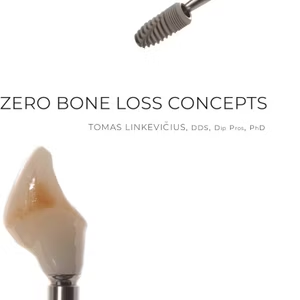 Zero Bone Loss Concepts
1 × Rp4.794.000
Zero Bone Loss Concepts
1 × Rp4.794.000 -
×
 Oral & Intravenous Bisphosphonate-Induced Osteonecrosis Of The Jaws
1 × Rp2.060.400
Oral & Intravenous Bisphosphonate-Induced Osteonecrosis Of The Jaws
1 × Rp2.060.400 -
×
 Qdt 2017
1 × Rp4.406.400
Qdt 2017
1 × Rp4.406.400 -
×
 Quintessence of Dental Technology 2015
1 × Rp2.570.400
Quintessence of Dental Technology 2015
1 × Rp2.570.400 -
×
 Foundations Of Dental Technology
1 × Rp2.264.400
Foundations Of Dental Technology
1 × Rp2.264.400 -
×
 Waxing For Dental Students
1 × Rp1.346.400
Waxing For Dental Students
1 × Rp1.346.400 -
×
 Atlas of Periodontology and Implant Therapy
1 × Rp9.588.000
Atlas of Periodontology and Implant Therapy
1 × Rp9.588.000 -
×
 Atlas Of Laser Applications In Dentistry
1 × Rp3.121.200
Atlas Of Laser Applications In Dentistry
1 × Rp3.121.200
Uncategorized
Dental Stem Cells: The Future of Regenerative Oral Health
Regenerative medicine is making waves in every corner of healthcare—and dentistry is no exception. Among the most exciting advancements is the use of dental stem cells, which are found in baby teeth, wisdom teeth, and permanent teeth. These tiny biological powerhouses could one day help regenerate not only teeth but also bones, nerves, and even heart tissue. In this blog post, we’ll explore what dental stem cells are, how they work, and the groundbreaking possibilities they hold for the future of oral health.
What Are Dental Stem Cells?
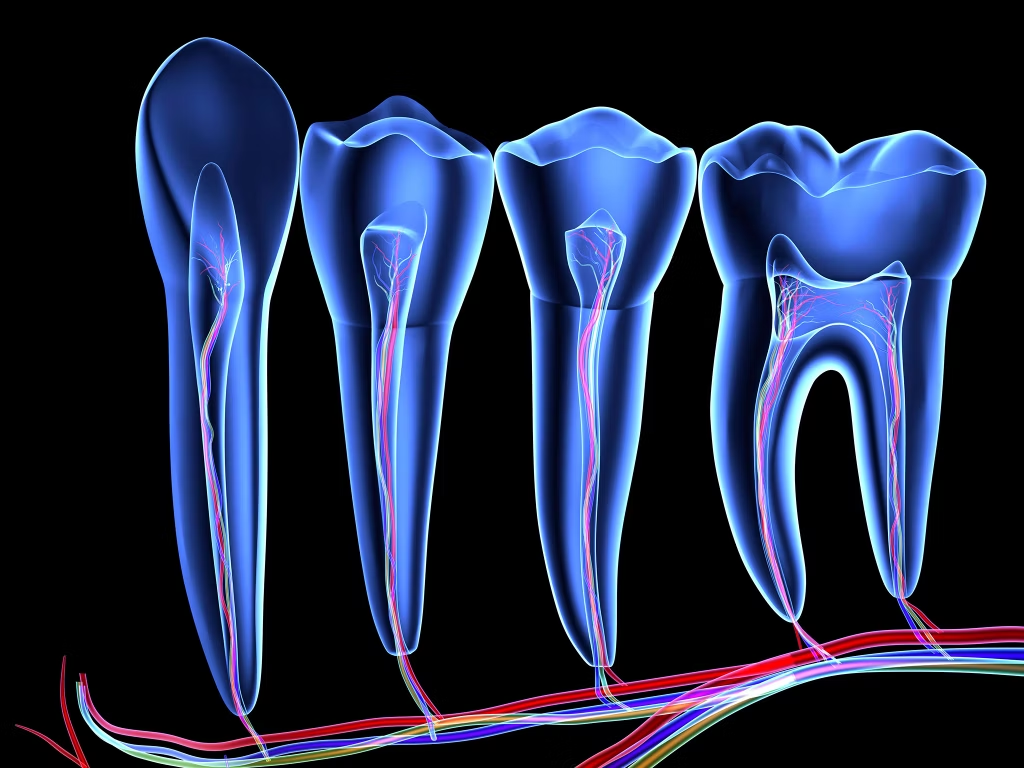
Dental stem cells are a type of mesenchymal stem cell (MSC) found in the pulp tissue inside teeth. Like other stem cells, they have the unique ability to self-renew and differentiate into various types of cells—such as bone, nerve, and muscle tissue.
They are typically harvested from:
Deciduous (baby) teeth
Extracted wisdom teeth
Permanent teeth with healthy pulp
These cells can be collected, stored (often in cryogenic conditions), and potentially used in future treatments.
Why Are They Important?
Stem cells have been used in medical treatments for decades, especially in bone marrow transplants. But dental stem cells are particularly valuable because:
They’re easier and less invasive to collect (compared to bone marrow or embryos).
They can be harvested during routine dental procedures like extractions.
They have high plasticity, meaning they can transform into many different cell types.
They offer regenerative potential in not just dentistry, but other areas of medicine.
Current and Future Applications of Dental Stem Cells
While most dental stem cell research is still in early or experimental stages, the potential applications are stunning:
1. Regenerating Dental Tissue
Imagine a future where instead of fillings and root canals, your dentist uses stem cells to help your tooth heal itself. Researchers are working on ways to regrow dentin (the hard tissue beneath enamel) and even entire teeth using stem cell scaffolds.
2. Treating Periodontal Disease
Stem cells may help regenerate lost gum tissue and bone around teeth affected by severe gum disease—restoring not just function but also appearance.
3. Bone and Jaw Repair
For patients undergoing dental implants or jaw reconstruction after trauma or disease, stem cell therapies could dramatically improve healing and reduce the need for grafts.
4. Nerve Regeneration
Dental stem cells have shown potential to regenerate nerve cells, opening the door to treating facial nerve injuries and possibly even conditions like Parkinson’s disease.
5. Systemic Health Benefits
Ongoing research is exploring the use of dental stem cells to treat diabetes, cardiac issues, and spinal cord injuries. Because these stem cells are relatively young and accessible, they could play a key role in personalized medicine.
How Are Dental Stem Cells Collected and Stored?
If you’re interested in preserving your child’s or your own dental stem cells, several companies now offer collection and storage services. The process typically involves:
Tooth Extraction – Usually a baby tooth that’s about to fall out or a wisdom tooth being removed.
Pulp Extraction – The dental pulp is carefully removed in a sterile environment.
Cell Isolation – The stem cells are separated and tested for viability.
Cryopreservation – The cells are frozen at extremely low temperatures and stored for future use.
Who Might Benefit from Stem Cell Banking?
Children with healthy baby teeth
Teens and adults having wisdom teeth extracted
People with a family history of degenerative diseases
Patients planning future cosmetic or restorative dental work
Challenges and Considerations
Cost: Stem cell banking can be expensive, with collection and long-term storage fees.
Regulation: The use of stem cells in treatment is still evolving and subject to strict regulations.
Research Stage: Many applications are still under study, and widespread use may be years away.
Conclusion: A Small Tooth with Huge Potential
Dental stem cells are unlocking a new frontier in regenerative dentistry and medicine. While we’re only at the beginning of this journey, the idea that your baby’s lost tooth or extracted molar could one day help cure disease or rebuild lost tissue is a powerful and hopeful possibility.
For patients, parents, and dental professionals alike, understanding and investing in this cutting-edge science could mean being part of a healthier, smarter future—where healing begins right at the root.
