
-
×
 Atlas Of Cosmetic Dentistry
1 × Rp4.263.600
Atlas Of Cosmetic Dentistry
1 × Rp4.263.600 -
×
 Orthodontic Setup
1 × Rp2.672.400
Orthodontic Setup
1 × Rp2.672.400 -
×
 Attachments In The Laboratory
1 × Rp2.346.000
Attachments In The Laboratory
1 × Rp2.346.000 -
×
 Infection Control For The Dental Team
1 × Rp714.000
Infection Control For The Dental Team
1 × Rp714.000 -
×
 Oral Health-Related Quality Of Life
1 × Rp1.203.600
Oral Health-Related Quality Of Life
1 × Rp1.203.600 -
×
 Endodontic-Periodontal Lesions
1 × Rp3.468.000
Endodontic-Periodontal Lesions
1 × Rp3.468.000 -
×
 Dental Erosion
1 × Rp1.815.600
Dental Erosion
1 × Rp1.815.600 -
×
 20 Principles Of The Alexander Discipline
1 × Rp3.121.200
20 Principles Of The Alexander Discipline
1 × Rp3.121.200 -
×
 The Biomechanical Foundation Of Clinical Orthodontics
1 × Rp5.671.200
The Biomechanical Foundation Of Clinical Orthodontics
1 × Rp5.671.200 -
×
 ITI Treatment Guide Volume 11: Digital Workflows in Implant Dentistry
1 × Rp2.284.800
ITI Treatment Guide Volume 11: Digital Workflows in Implant Dentistry
1 × Rp2.284.800 -
×
 Dental Materials In Operative Dentistry
1 × Rp999.600
Dental Materials In Operative Dentistry
1 × Rp999.600
Uncategorized
The Truth About Dental X-Rays: Are They Safe?
Dental X-rays are a routine part of most dental checkups, but many patients wonder: Are they really safe? With all the focus on reducing radiation exposure, it’s natural to have concerns about having X-rays taken.
In this post, we’ll explore everything you need to know about dental X-rays—how they work, how safe they are, and why they’re a vital part of your dental care.
🩻 What Are Dental X-Rays?
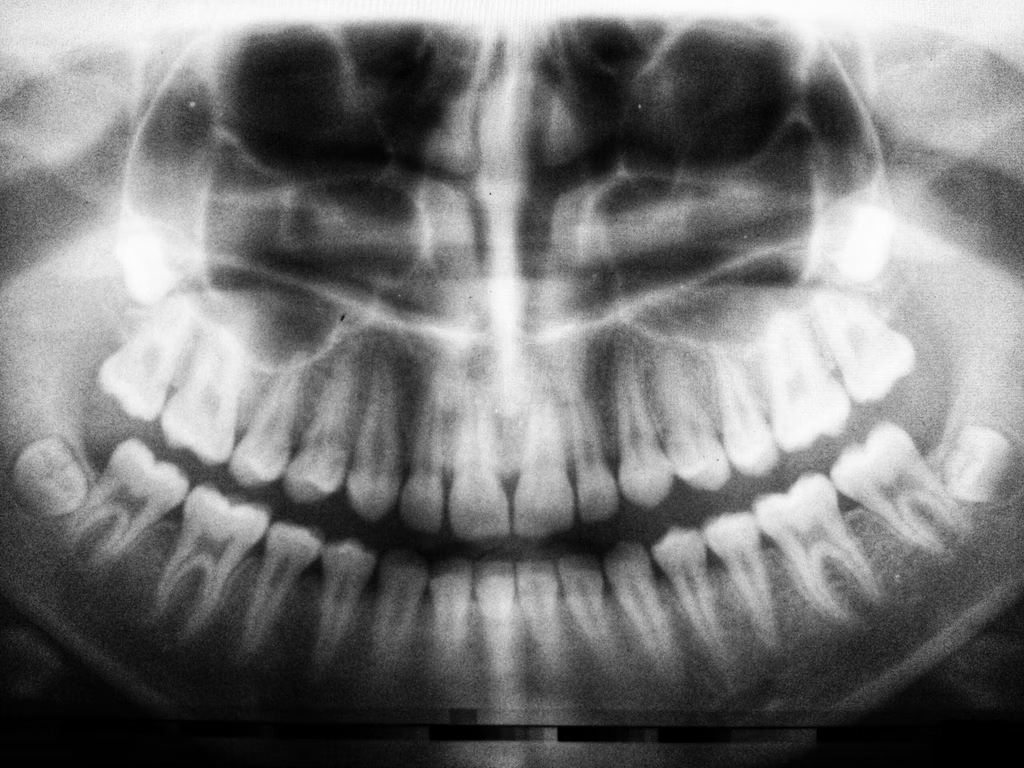
Dental X-rays, also known as radiographs, are images that allow your dentist to see what’s happening beneath the surface of your teeth and gums. This technology helps identify hidden issues like cavities, infections, impacted teeth, bone loss, and even tumors.
X-rays are typically taken:
As part of a routine checkup
If you have pain or swelling
When new dental restorations are being placed
Before major dental treatments like braces or implants
⚖️ Are Dental X-Rays Safe?
Yes, dental X-rays are very safe, especially with the advancements in modern technology. Here’s why:
1. Low Radiation Exposure
Dental X-rays use minimal radiation—so minimal, in fact, that the amount of radiation from a dental X-ray is typically less than the amount you’re exposed to from natural background radiation over the course of a single day.
For comparison:
One full-mouth X-ray is equivalent to about two days of natural background radiation.
A single bite-wing X-ray (the kind used for routine checkups) is even less.
2. Digital X-Rays: A Game Changer
Digital X-rays use much less radiation than traditional film-based X-rays. They also provide immediate images, which means your dentist can spot problems faster and take action when needed.
🚨 What About the Risks?
While the radiation exposure from dental X-rays is minimal, there are still risks, especially for certain populations:
Pregnant women: While there’s no definitive evidence that dental X-rays harm developing babies, it’s best to inform your dentist if you’re pregnant. Protective measures like lead aprons or thyroid collars are used to minimize any risks.
Young children: Children’s tissues are more sensitive to radiation, so X-rays are only recommended when necessary, and extra caution is taken to limit exposure.
📅 How Often Do I Need X-Rays?
The frequency of dental X-rays depends on your age, dental history, and risk for oral diseases. For example:
New patients or those with extensive dental work may need a full set of X-rays.
Routine checkups typically involve bitewing X-rays every 1-2 years to monitor for cavities.
If you’re low risk for dental issues, you might not need X-rays every year.
Your dentist will always evaluate your individual needs and recommend X-rays based on your specific health and dental condition.
🔍 Why Dental X-Rays Are So Important
Even though dental X-rays involve some radiation, they are incredibly valuable tools that help:
Detect early signs of cavities, even those that are hidden between teeth
Monitor gums and bone health, which can help detect gum disease or bone loss
Plan for procedures like root canals, implants, or extractions
Spot early warning signs of oral cancer, tumors, or cysts
Without X-rays, these issues might go undetected until they become much bigger (and more costly) problems.
💡 Final Thoughts: Dental X-Rays Are a Smart and Safe Tool
Dental X-rays are an essential part of modern dentistry, allowing dentists to provide the best care by identifying problems early. The amount of radiation you’re exposed to is extremely low, and modern technology continues to make the process safer and more effective than ever.
If you’re still concerned, talk to your dentist! They can explain the need for X-rays and ensure you feel comfortable with the process.
