
-
×
 The Single-Tooth Implant: A Minimally Invasive Approach for Anterior and Posterior Extraction Sockets
1 × Rp4.182.000
The Single-Tooth Implant: A Minimally Invasive Approach for Anterior and Posterior Extraction Sockets
1 × Rp4.182.000 -
×
 Bells Oral And Facial Pain 7Th Edition
2 × Rp2.346.000
Bells Oral And Facial Pain 7Th Edition
2 × Rp2.346.000 -
×
 Surgical Complications In Oral Implantology: Etiology, Prevention And Management
2 × Rp4.467.600
Surgical Complications In Oral Implantology: Etiology, Prevention And Management
2 × Rp4.467.600 -
×
 Surgical And Radiologic Anatomy For Oral Implantology
2 × Rp5.181.600
Surgical And Radiologic Anatomy For Oral Implantology
2 × Rp5.181.600 -
×
 Autologous Blood Concentrates
1 × Rp5.895.600
Autologous Blood Concentrates
1 × Rp5.895.600 -
×
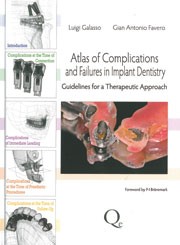 Atlas Of Complications And Failures In Implant Dentistry: Guidelines For A Therapeutic Approach
1 × Rp7.813.200
Atlas Of Complications And Failures In Implant Dentistry: Guidelines For A Therapeutic Approach
1 × Rp7.813.200 -
×
 Zero Bone Loss Concepts
2 × Rp4.794.000
Zero Bone Loss Concepts
2 × Rp4.794.000 -
×
 Atlas Of Tooth & Imp-Supp Prosthodontics
1 × Rp2.978.400
Atlas Of Tooth & Imp-Supp Prosthodontics
1 × Rp2.978.400 -
×
 Bone Augmentation In Oral Implantology
1 × Rp3.345.600
Bone Augmentation In Oral Implantology
1 × Rp3.345.600 -
×
 Atlas Of Cosmetic Dentistry
1 × Rp4.263.600
Atlas Of Cosmetic Dentistry
1 × Rp4.263.600 -
×
 Autotransplantation Of Teeth
1 × Rp3.468.000
Autotransplantation Of Teeth
1 × Rp3.468.000 -
×
 Prosthetic Rehabilitation: Part Ii Technical Procedures
1 × Rp5.854.800
Prosthetic Rehabilitation: Part Ii Technical Procedures
1 × Rp5.854.800 -
×
 Atlas of Periodontology and Implant Therapy
1 × Rp9.588.000
Atlas of Periodontology and Implant Therapy
1 × Rp9.588.000
Uncategorized
The Surprising Connection Between Sleep Apnea and Oral Health
Sleep apnea is often seen as a medical issue—but did you know your dentist might be the first to spot it? This common sleep disorder doesn’t just affect your rest—it can leave behind clues in your mouth that could be damaging your teeth and gums without you even knowing it.
Let’s explore how sleep apnea and oral health are connected—and why your dentist plays a key role in detection and treatment.
1. What Is Sleep Apnea?
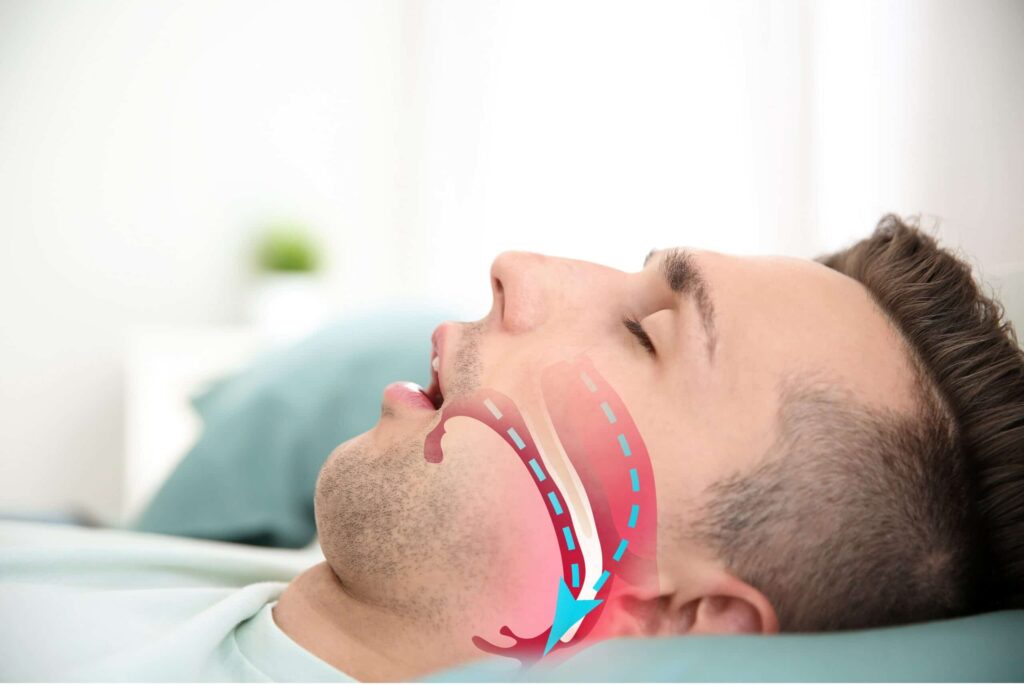
Sleep apnea is a condition where breathing repeatedly stops and starts during sleep. The most common type, obstructive sleep apnea (OSA), happens when throat muscles relax and block the airway.
Common symptoms: Loud snoring, gasping for air, daytime fatigue, dry mouth in the morning.
Silent signals: Even if you don’t remember waking up, your body might be struggling for oxygen all night.
2. Teeth Grinding (Bruxism) and Sleep Apnea
One of the biggest dental red flags for sleep apnea is nighttime teeth grinding, or bruxism.
Why it happens: The body subconsciously clenches the jaw to reopen the airway during apneic events.
Damage caused: Worn enamel, cracked teeth, jaw pain, and headaches.
Tip: Your dentist can spot wear patterns and recommend a sleep study if apnea is suspected.
3. Dry Mouth and Increased Cavity Risk
People with sleep apnea often breathe through their mouths at night, especially if they snore. This dries out saliva—a natural protector against bacteria.
Dry mouth leads to: Higher risk of cavities, bad breath, and gum infections.
What saliva does: Neutralizes acids, washes away food particles, and helps remineralize enamel.
Tip: Hydration, fluoride rinses, and customized treatment can protect your teeth if you’re breathing through your mouth at night.
4. TMJ Pain and Jaw Disorders
The jaw’s position can influence the airway. In some patients, a recessed lower jaw contributes to both sleep apnea and temporomandibular joint (TMJ) issues.
Symptoms: Jaw clicking, facial pain, limited jaw movement.
Connection: Improper alignment may worsen apnea and place strain on jaw muscles.
Tip: A dentist trained in airway and jaw function can help manage both TMJ issues and mild sleep apnea with oral appliances.
5. How Dentists Can Help
Dentists are often the first to notice signs of sleep apnea during routine exams. Many are trained to provide oral appliance therapy, a custom-fitted mouthguard-like device that keeps the airway open during sleep.
Alternative to CPAP: For mild to moderate apnea, oral appliances can be more comfortable and easier to use.
Bonus: They can also help reduce snoring and grinding.
Tip: If you snore, grind your teeth, or wake up tired, talk to your dentist—they may refer you for a sleep test.
Conclusion: Better Sleep Starts in the Dental Chair
Your oral health and sleep quality are more connected than you think. If you’re grinding your teeth, waking up with a dry mouth, or feeling unusually tired, your dentist might hold the key to a better night’s rest.
